Posts

Showing posts with the label Spices and Seasonings (Masalaa Haru)

Nepal Travel Cost 2026: Complete Budget Guide

Image
Budget note: These figures are planning estimates, not verified current quotations. Confirm prices and route-specific permits before payment. Allow separately for international flights, insurance and emergencies. Nepal is one of the most affordable countries in Asia—but how much does a trip to Nepal actually cost in 2026? The answer depends on how you travel, where you sleep, what you eat, and whether you plan to trek in the Himalayas. This guide breaks down illustrative travel-budget estimates for accommodation, food, transport, permits, trekking, and tours. You’ll also get sample daily budgets for backpackers, mid-range travelers, and luxury visitors. By the end, you’ll know exactly how much to budget for your Nepal trip. How Much Does a Trip to Nepal Cost? Quick Answer Traveler Type Daily Budget (USD) What It Includes Backpacker $25–$45 Hostel/dorm, local food, local buses, shared rooms Mid-range $60–$110 Private room, tourist restaurants, occasional taxi, guided tours Luxury $150–...
Fennel Plant and Seeds Spice - Saunp or Saunf - (सौंप)

Image
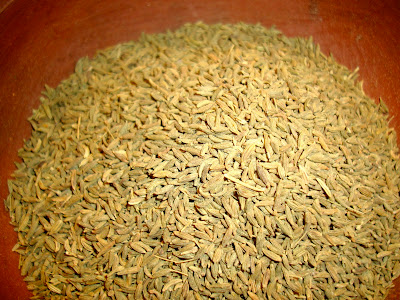
Fennel Plant and Seeds - Saunp or Saunf - (सौंप) The strong-smelling fennel plant has bright green stalks, lacy, dark green leaves, and mustard-yellow flowers, which turn into seed-heads when ripe.  Funnel Seeds are collected before they mature and dried.   Funnel Seeds slightly curved seeds are oval shaped with ridges, greenish-yellow; look somewhat like plump cumin seeds.  Funnel Seeds are aromatic spice with a mild licorice flavor.  All parts of the fennel plants are edible, including the young tender shoots, leaves, and stalks, as well as seeds.   Close-up look of Fennel Seeds Introduction to Funnel Seeds:  Foeniculum vulgare, commonly referred to as fennel, may be a flavorful culinary herb and medicinal plant. Fennel plants are green and white, with feathery leaves and yellow flowers. Both the crunchy bulb and therefore the seeds of the fennel plant have a light , licorice-like flavor. Yet, the flavour of the seeds is...

Red, Cayenne Pepper, Chilli - Rato, Hariyo, Sukeko Khursani

Image
Red Pepper , Cayenne pepper, Chilli, Chili - Rato Khursani, Khorsani, Hariyo Khursani, Sukeko Khursani (रातो खुर्सानी, खोर्सानी) Chillies comes in all sizes, shapes, flavor, and colors.  They are the members of capsicum family. The extremely hot and flavorful chili was grown in our home garden.  5 health benefits of red peppers Red peppers are a source of vitamin A, C and folate. Try them on this world's healthiest pizza recipe. Red peppers are the belle of the ball at any buffet table. Crisp and incredibly sweet, these ladies in red are a simple sell to anyone who isn't keen on vegetables. the sole limiting factor is that they will be costly during winter, we will anticipate to eating more inexpensive local peppers. Did you recognize that green peppers are just unripe red peppers? Because they're not fully mature, they need a bitter after taste, and half the vitamin C and 1/10th the vitamin A compared to their red or orange siblings. vitamin A is vita...

About Asafoetida Spice - Heeng or Hing (हिङ्ग - हींग)

Image
Asafoetida Spice - Heeng or Hing (हिङ्ग - हींग) Asafetida Is the Spice That Makes Food Tasty Also called hingu (Sanskrit) or devil's dung, asafoetida is used extensively in Nepali cooking to flavor and preserve food, as well as for its medicinal properties.  Asafoetida comes from an herbaceous fennel-like perennial plant.  When mature, the stems are cut close to the roots releasing a milky substance that solidifies into brownish, gummy mass.   Asafoetida is sometimes described as having an unpleasant and over powering smell, due in part to the presence of sulfur.  In Nepal, there is a saying, "hing ne bhai pani hing ko taalo cha" ("even if the asafoetida is used up, its aroma lingers in the wrapping cloth").  However when used with discretion, this spice mellows and adds a pleasant aroma to prepared food.  The flavor of asafoetida is definitely an acquired taste, although some people describe it as similar to shallots or garlic. As...

Nutmeg and Mace Spice - Jaiphal, Javitri - (जाइफल - जावित्री)

Image
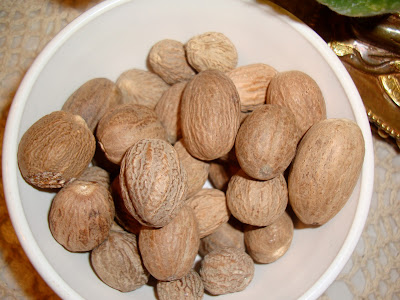
Nutmeg and Mace  Spice - Jaiphal, Javitri - ( जाइफल - जावित्री) Garam Masala Well Known for its strongly aromatic Scent, warm, fresh, and nutty flavor, nutmeg comes from fruit of nutmeg tree.  It is an essential ingredient in Nepali Garam Masala mixture. Ground nutmeg is frequently used to season strong-flavored meat like game, venison, and organ meats.  Nutmeg should be used in moderation, a small pinch is generally sufficient to flavor a moderate-size dish. Whole Nutmeg - oval shape, light brown and slightly wrinkled exterior.  It is suggested to purchase whole nutmeg and grind it as needed, because its flavor deteriorates and looses its potency soon after grinding.  Whole nutmeg keeps indefinitely if they are stored in an airtight container. Mace ( javitri ) is the outer lacy covering that surrounds the hard nutmeg seeds.  Both spices have delicate flavor.  It is available whole (above picture) or in grounded form.    ...

Bay Leaves (cassia) - Tej paat, Tej-patta - (तेजपत्ता)

Image
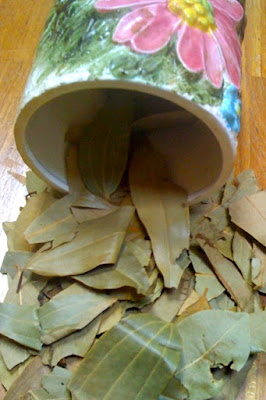
Bay Leaves (cassia) Spice - Tejpaat, Tej-patta - (तेजपत्ता) Garam Masala Picked From the aromatic evergreen tree, this herb is also known as Indian cassia, cinnamon leaves and tej patta .  The dried leaves are oblong shaped and usually have three prominent veins.  The dried Bay leaves have a warm, sweet, and distinct cinnamon aroma.   They are usually lightly sauteed for all kinds of spiced meat and fish curries, savory rice dishes, lentils, and some vegetables and are usually removed from the dish before it is served. The highly scented dried cassia leaves becomes dull brown when dried.  Bay leaves are tough to grind, so commonly used whole,  instead of ground form. Bay leaves  can be used fresh, but the dried ones are most common.     And How to Cook With and Store Them A herb may be a fragrant leaf from a laurel tree that's used as an herb. Bay leaves are often used fresh or dried; dried bay leaves tend to possess...

Himalayan Herbs Jimbu - dried leaves of a local onion species - (जिम्बु)

Image
Himalayan Herb Jimbu - (Bot. name - Allium Hypsistum Stearn) - dried leaves of a typical local onion chives species  - ( जिम्बु ) It is also known as Himalayan aromatic leaf garlic, jimbu is a dried aromatic herb that is virtually unknown outside the Himalayan region.  The herb looks like dry brownish-green grass and has a distinct flavor somewhat similar to garlic and shallots.   It is mostly found wild state throughout many regions of Nepal.  The leaves and tender stems are carefully picked and dried, which weakens the flavor, but this is reversed by browning in hot oil until fully fragrant.   Nepalese have a remarkable fondness for this herb and they use it as a tempering spice to flavor daals, vegetables, salads, and pickles.   For more information, please check Wikipedia The following information is from - An Introduction to Nepalese Food Plants by Puskal P. Regmi (1982) Com name: Nepal Aromatic Leaf Garli...