Posts

Showing posts with the label culture of nepal

Nepal Travel Cost 2026: Complete Budget Guide

Image
Budget note: These figures are planning estimates, not verified current quotations. Confirm prices and route-specific permits before payment. Allow separately for international flights, insurance and emergencies. Nepal is one of the most affordable countries in Asia—but how much does a trip to Nepal actually cost in 2026? The answer depends on how you travel, where you sleep, what you eat, and whether you plan to trek in the Himalayas. This guide breaks down illustrative travel-budget estimates for accommodation, food, transport, permits, trekking, and tours. You’ll also get sample daily budgets for backpackers, mid-range travelers, and luxury visitors. By the end, you’ll know exactly how much to budget for your Nepal trip. How Much Does a Trip to Nepal Cost? Quick Answer Traveler Type Daily Budget (USD) What It Includes Backpacker $25–$45 Hostel/dorm, local food, local buses, shared rooms Mid-range $60–$110 Private room, tourist restaurants, occasional taxi, guided tours Luxury $150–...
Nepal Heritage Architecture: Kathmandu Valley and Lumbini Guide

Nepal’s cultural heritage rewards a closer look: carved wooden windows, brick courtyards, stone shrines and stupas reveal different traditions of building and worship. This guide helps you decide what to look for in Kathmandu Valley and Lumbini. Read the architecture of the Durbar Squares Kathmandu, Patan and Bhaktapur each have a historic royal square. Visit them as distinct places rather than interchangeable stops. Look at how palace entrances, temple platforms and public courtyards connect with the surrounding streets. Kathmandu: palace and living traditions Hanuman Dhoka and the area around Kumari Ghar connect royal history with continuing religious traditions. Look for carved timber details and the relationship between smaller shrines and larger buildings. Follow access signs: not every doorway is a public entrance. Patan: stone, metal and courtyards Patan Durbar Square in Lalitpur is known for skilled craftsmanship. The stone Krishna Mandir offers a useful contrast with brick-and...

Fruits of Nepal: Common Names in Nepali and English

Image
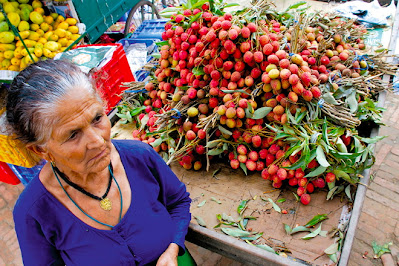
Looking for fruit names in Nepali and English? This list pairs common Nepali names, such as kera (banana), aanp (mango) and lapsi (Nepalese hog plum), with English equivalents and market photographs. Roman spellings and local names vary by region. Use the names as a starting point and confirm the fruit with the seller when shopping. Lists of most common fruits of Nepal (Nepali-English) (Phalphulharu) Aanp - Mango Ainselu - Raspberry (yellow, red, black) Alubukhara - Plum Amalaa  - Gooseberry Ambaa or Ammaa - Guava Anaar - Pomegrante Angoor - Grape Anjir - Fig Aru – Peach Bayar - Indian Plum, Chinese Date Bel - Wood Apple Bhogate -Pummelo, Pomilo Bhuin Katahar – Pineapple Bimiro – Citron Chaaksi -  Mild Orange Chutro – Barberry Chinia Naspaati – Chinese Pear Daakh – Grape Daarim – Pomegranate Haade Bayer - Bead Plum Haade Okhar - Thick-shell black walnut Haluaabed - Persimmon Jaamun – Black Plum, Java Plum Junaar - Junar Orange Jyaamir - Lemon (very...

Bauhinia and Potato Salad Pickle (Koirala ko Phool ra Aloo ko Achaar)

Image
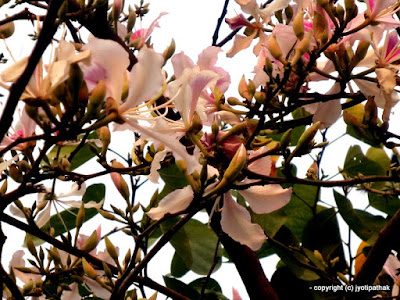
  Bauhinia and Potato salad (Koiralo ko Phool re Aloo ko Achaar - (कोइरालोको फुल र आलुकोअचार) A quick and simple guide to help you all enjoy a well-loved, edible flower called, Koiralo (कोइरालो) or Bauhinia .  It is used as an exotic spring delicacy. Koiralo tree is in full bloom in the Spring time (February-March) in Nepal  Koiralo ko Phool (seto-raato ) - Bauhinia   - local name: कोइरालो Common Name - Mountain Ebony, Camel's foot, Orchid tree, Kanchanara (Sanskrit), Kachnar (Hindi) Botanical Name - Bauhinia Variegata L. Useful parts: Flower, Bark, Roots Family: Caesalphiniaceae Koiralo ko Phool (कोइरालो को फुल),  or Mountain Ebony, is the edible flowers of the Bauhinia tree. The flowers and un-opened buds are collected from the tree and cooked as a delicious vegetable, made into salad-like dish or pickles. It is a popular spring flowers and has become integral part of Nepali cuisine, where it has been consumed for centuries. ...

Laakhamari (Newari Ceremonial Sweet Bread) - लाखामरी in Nepali

Image
Information about  Laakhamari (Newari Ceremonial Sweet Bread) - लाखामरी Laakhamari is described as a crunchy-flaky texture bread, prepared for special ceremonial occasions.  The sweet bread resembles a coiled, round, large twisted-rope shaped (like wreath) and is prepared from rice, wheat flour, and black gram lentils. A kind of bread,  Laakhamari   is prepared on special occasions, especially wedding. Sweet in taste, this crunchy bread is made with rice, wheat flour, and black gram lentils. When in Nepal, do binge on this one-of-its-kind bread. The special bread comes from the Newar community, one of the oldest ethnic groups in the capital valley of Kathmandu, who have an important cultural tie in the country.  Although laakhamari is typical Newari sweet bread, it has gained popularity with many other Nepalese ethnic group over the years. Photo of unglazed  laakhamari  bread The ingredients and preparation techniques of laak...

Maaghe Sankranti Festival of Nepal - माघे संक्रान्ती

Image
The Festival of Nepal - Maaghe Sankranti (माघे संक्रान्ती) .. .root vegetables are filled with Nepali markets during Maaghe Sankranti time   Maaghe  Sankranti Festival is just around the corner, so I invite you to discover more about the most important festival in Nepal. I am so happy to share the photographs of such a colorful, vibrant and exciting time of the year in Nepal.  Maaghe Sankranti (माघे सङ्क्रान्ति), also called Makar Sankranti (मकर सङ्क्रान्ति), is one of the most important and auspicious religious festival in Nepal. It is celebrated in the first day of Maagh (Nepali calendar Bikram Sambat) which falls on January 14, 2014.  Nepalese celebrate the festival to mark the end of winter into upcoming spring where the temperature is getting warmer and days are getting longer.  As per Wikipedia, "On this day, the sun is believed to leave its southernmost position and begin its northward journey. Maaghe Sankranti is similar ...