Posts

Showing posts from November, 2011

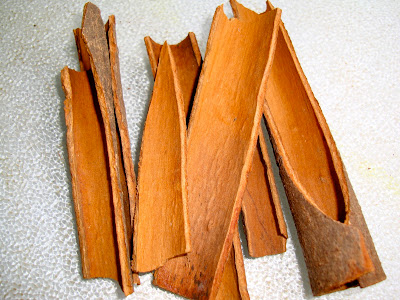
Cinnamon, Cassia Bark - Daalchini - (दालचीनी)
Image
Cinnamon, Cassia Bark - Daalchini - (दालचीनी) One of the oldest known and most aromatic spices, cinnamon is the dried inner bark of a tropical evergreen tree.  The bark is reddish-brown in color, pungent, sharp tasting, and easily breakable. Cinnamon sticks keep indefinitely, but ground cinnamon loses its flavor more quickly. Picture of a Nepali cinnamon - cassia bark, large, thicker and coarser and a feel of a tree bark, easily breakable.  In Nepal, a small stick of cinnamon is chewed with cardamom and cloves after a heavily spiced meal to freshen the breath and palate. Cinnamon quills - very flavorful Cinnamon is used either whole or ground to flavor sauces, rice, desserts, syrups, and is brewed with Nepali milky tea.  Cinnamon is also one of the components of Nepali spice blends.

Cilantro or Fresh Coriander - Hariyo Dhania ko Paat, Dhaniyan ko saag (धनियाँको साग)

Image
Cilantro or Fresh Coriander  - Hariyo Dhania ko Paat, Dhaniyan ko saag ( धनियाँको साग) Also called fresh coriander or Chinese parsley,  cilantro is the fresh leaves and stems of the coriander plant.  The seeds and leaves have completely different flavors and aromas and cannot be substituted for one another.  Fresh cilantro has  distinct and sharp flavor, whereas the seeds are much milder.  Freshly picked cilantro is sold neatly tied in bunches with stems and roots in Nepali markets. A small amount of chopped fresh cilantro is sprinkled on nearly every Nepali dish as a garnish and to add extra flavor. Fresh cilantro leaves, stems and roots can be stored in the refrigerator for up to one week in a container lined with a paper towel.

Cardamom, Green Pods - Sukumel, Sano Sukumel, Sukmel - (सुकमेल, सानो सुकुमेल, सुकुमेल)

Image
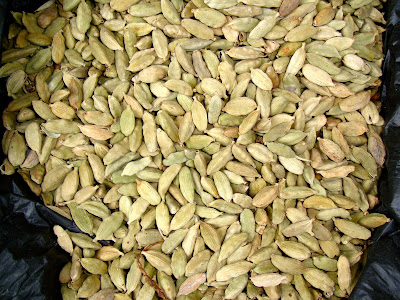
Cardamom, Green Pods - Sukumel, Sano Sukumel, Sukmel - (सुकमेल, सानो सुकुमेल, सुकुमेल) The dried fruit of a perennial bushy plant of the ginger family, green cardamom pods are three-sided, smooth skinned, and contain reddish-brown seeds.  The seeds are sticky and have a highly aromatic flavor with a hint of eucalyptus.  Because of its high price, it is used sparingly.  When the recipe calls for whole cardamom, the pods are cracked leaving the seeds intact, adding a subtle flavor to dish.  Please see more description of this valuable spice in wikipedia. Whole Green Cardamom Pods Cardamom is one of the most important ingredients in Nepali sweets, and is also popular in meat and vegetable curries, sweet preserved pickles, and beverages.  It is also one of the ingredients used to make Nepali garam masala (spice mixture).  In the above picture, cardamom is used in freshly ground form, whole cardamom seeds, and just slightly cracked. Cardamom seeds are als...

Cardamom, Black Pods - Thulo Sukumel, Alainchi - (अलैंची, ठूलो सुकुमेल)

Image
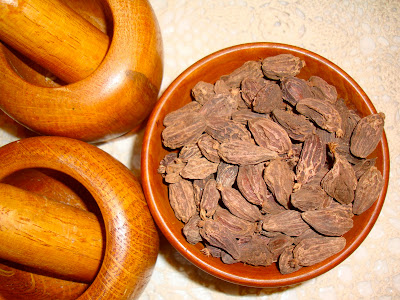
Cardamom, Black Pods - Thulo Sukumel, Alainchi - (अलैंची, ठूलो सुकुमेल) Native to sub-Himalayan region, black cardamom is the dried fruit of a perennial herbaceous plant of the ginger family.  Apart from its usage in India, Nepal and other Asian countries, black cardamom is not common.  Some people describe black cardamom as an inferior substitute to green cardamom, but it is considered a valuable spice in Nepal.  When cooked with this spice, it enhances and intensifies the taste of food without overpowering a dish.  It is one of the ingredients used to make Nepali Garam Masala spice blends, and is also used in meat curries, rice dishes and pickles.  It is available in Indian, Nepali food stores.  Look for pods with moist, sweet seeds, and smoky fragrance.  Old pods with splits and cracks will have poor quality seeds with no flavor.  The seeds quickly lose their flavor once the pods are opened, so store the pods whole and grind the seeds as neede...

Ajowan Seeds - Jwaano, Javano ( ज्वानो, जवानो)

Image
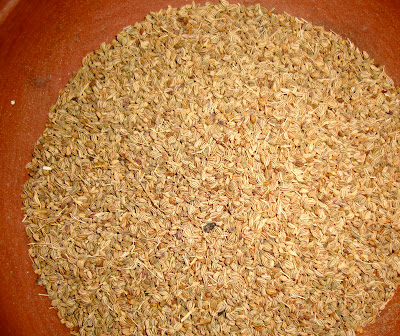
Ajowan Seeds - Jwaano, Javano (ज्वानो, जवानो) Jwaano is used extensively in Nepali cooking.  These tiny gray-brown seeds have a striped surface and resemble celery seeds, but have a somewhat sharper and more pungent flavor.  If the seeds are chewed plain, they are quite strong, bitter, and stinging, but their aftertaste is is quite pleasant.  They are usually lightly fried to release their flavor and added at the beginning stages of the cooking process.  The seeds are sometimes lightly crushed in a mortar and pestle and added to batters.  Ajowan seeds are one of the most important spices in the much-loved Nepali Kwanti   (sprouted bean soup).  ___________________________________________________________________ Close-up view of Ajowan seeds Shopping at spice market at Ason Tole area, Kathmandu which offers exotic packaged spice blends, ground and whole spices,  momo spices ( bite-size dumpling filled with meat or vegetables ) , and Nepali garam mas...

Commonly Used Herbs and Spices in Nepali Cooking

Image
Commonly Used Herbs and Spices in Nepali Cooking (Nepali Masalaa Haru)  The following list describes some of the special herb and spices used in Nepali cooking. Most spices are available in Indian, East Asian, and Middle Eastern grocery stores or some health food stores and larger supermarkets. In my next posting I will add more detailed descriptions and pictures of each of these herb and spices. ______________________________ ______________________________ ___ Ajowan Seeds - Jwaano, Javano (जवानो, ज्वानो) Asafetida - Heeng or Hing (हिङ्ग - हींग) Bay Leaves - Tejpaat, Tej-patta - (तेजपत्ता) Cardamom, Black Pods - Thulo Sukumel, Alainchi - (अलैंची, ठूलो सुकुमेल) Cardamom, Green Pods - Sukumel, Sano Sukumel, Sukmel - (सुकमेल, सानो सुकुमेल, सुकुमेल) Cilantro or Fresh Coriander  - Hariyo Dhania ko Paat, Dhaniyan ko saag - ( धनियाँको साग) Cinnamon, Cassia Bark - Daalchini - (दालचीनी) Cloves - Lwang - (ल्वाङ्ग) Coriander Seeds - Dhania ko Geda - ( धनियाँ ) Cumin Seeds - Jeera,...

Absolutely love my Daal-Bhaat-Tarkaari!

Image
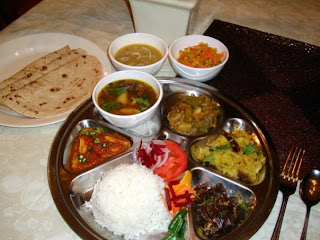
Given Nepal's vast geographic and cultural diversity,  it is difficult to generalize about what constitutes Nepali cuisine.  It is however, characterized by its simplicity, lightness, and healthfulness.  A typical meal uses only the freshest local ingredients, minimal fat, and an artful combination of herbs and spices. Nepali cuisine varies by region, from the tropical Terai region to the arctic Himalayas, but most meals consist of some form of rice or other grain accompanied by dried beans, lentils, or peas, and fresh vegetables.  A common meal in many areas is daal-bhaat-tarkaari, (lentil-rice-vegetable) combination.  Rice is usually boiled and accompanied by a lentil soup.  The daal is prepared from a variety of dried beans, lentils and peas.  There are at least a dozen varieties of daal dishes and each has different tastes and flavor.  This also provides a liquid that go along with the rice.  Vegetables are the third comp...